Organic Skin & Hair Care
Organic Skin & Hair Care

Dry, rough, frizzy hair rarely becomes that way overnight. Frequent heat styling, colouring, chemical treatments, sun exposure, humidity, harsh shampoos and everyday friction can gradually leave the hair shaft feeling dry, weak and difficult to manage.
That is where a hair mask for dry damaged hair can become a useful part of a consistent hair-care routine.
Unlike a regular conditioner, a hair mask is generally designed to provide more intensive conditioning. The right formula can help improve softness, smoothness, shine and manageability while making dry, damaged-looking hair feel healthier.
But choosing a hair mask is not simply about picking the one with the longest ingredient list. Understanding what your hair actually needs makes a much bigger difference.
A hair mask is an intensive conditioning treatment designed to give the hair more concentrated care than a regular rinse-out conditioner.
Depending on its formulation, a nourishing hair mask may contain:
These ingredients work mainly on the hair shaft and cuticle, helping improve the way hair feels and looks.
A good hair mask can be particularly useful when hair feels:
It is important to understand that cosmetic hair treatments do not permanently reverse structural damage or regenerate damaged follicles. Their main role is to condition, smooth and improve the appearance and manageability of the existing hair fibre.
Before choosing a natural or nourishing hair mask, it helps to understand what caused the dryness in the first place.
Straighteners, curling irons and frequent blow-drying expose hair to high temperatures. Repeated heat can affect the hair’s outer structure and contribute to dryness, roughness and breakage.
Hair colouring, bleaching, rebonding, relaxing and repeated chemical processing can leave hair more porous and fragile.
Chemically treated hair often needs extra conditioning because it may lose moisture more easily.
Regular exposure to sunlight can contribute to changes in the appearance and feel of hair, particularly when combined with heat and environmental exposure.
Some shampoos and styling products may leave already-dry hair feeling even more stripped or rough, especially when used too frequently.
Tight hairstyles, rough towel drying and excessive brushing can contribute to mechanical damage and breakage.
Pakistan’s climate can present its own hair-care challenges. Heat and humidity can make frizz more noticeable, while dry weather can leave some hair types feeling rough and dehydrated.
These terms are often used interchangeably, but they describe slightly different concerns.
Dry hair primarily refers to hair that lacks sufficient moisture and feels rough, dull or difficult to manage.
Damaged hair refers to physical changes to the hair fibre caused by factors such as heat, chemicals, friction or environmental exposure.
You can have dry hair without significant damage, and damaged hair can also become dry and rough.
A nourishing hair mask can help address the cosmetic symptoms associated with both conditions, particularly dryness, roughness, frizz and poor manageability.
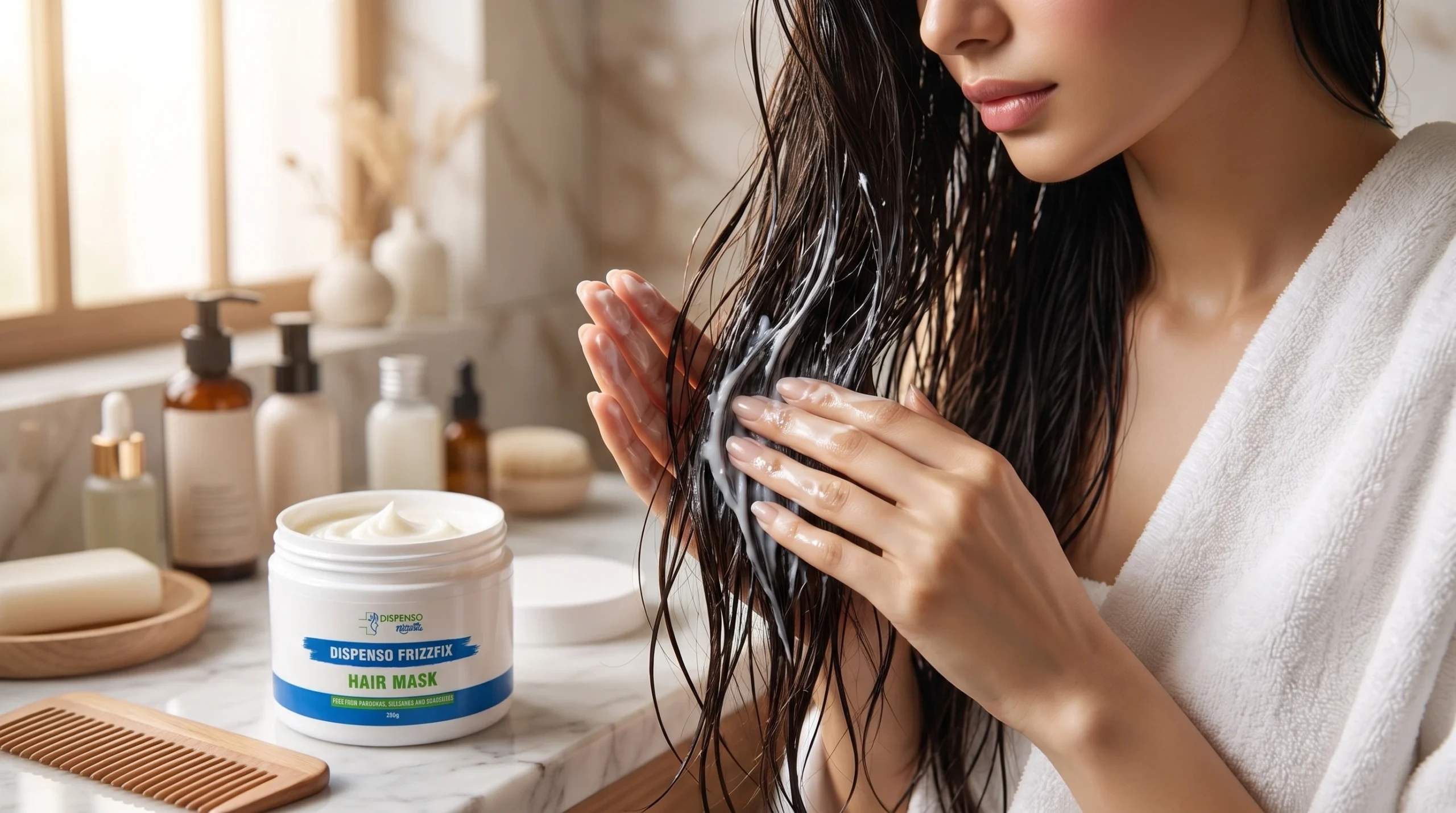
A well-formulated hair mask can help:
Different ingredients contribute in different ways.
Some provide conditioning, some help retain moisture, while others coat and smooth the hair surface.
That is why the ingredient combination matters more than simply choosing a product labelled “natural” or “repair.”
Both products condition the hair, but they are generally used differently.
| Conditioner | Hair Mask |
|---|---|
| Designed for regular conditioning | Designed for more intensive conditioning |
| Usually used after shampoo | Often used once or a few times weekly |
| Lightweight formulas are common | Richer formulas are common |
| Helps with everyday softness and manageability | Useful when hair needs additional nourishment and conditioning |
A hair mask does not necessarily have to replace conditioner permanently. However, a sufficiently conditioning mask can sometimes be used instead of conditioner, depending on the product and your hair type.
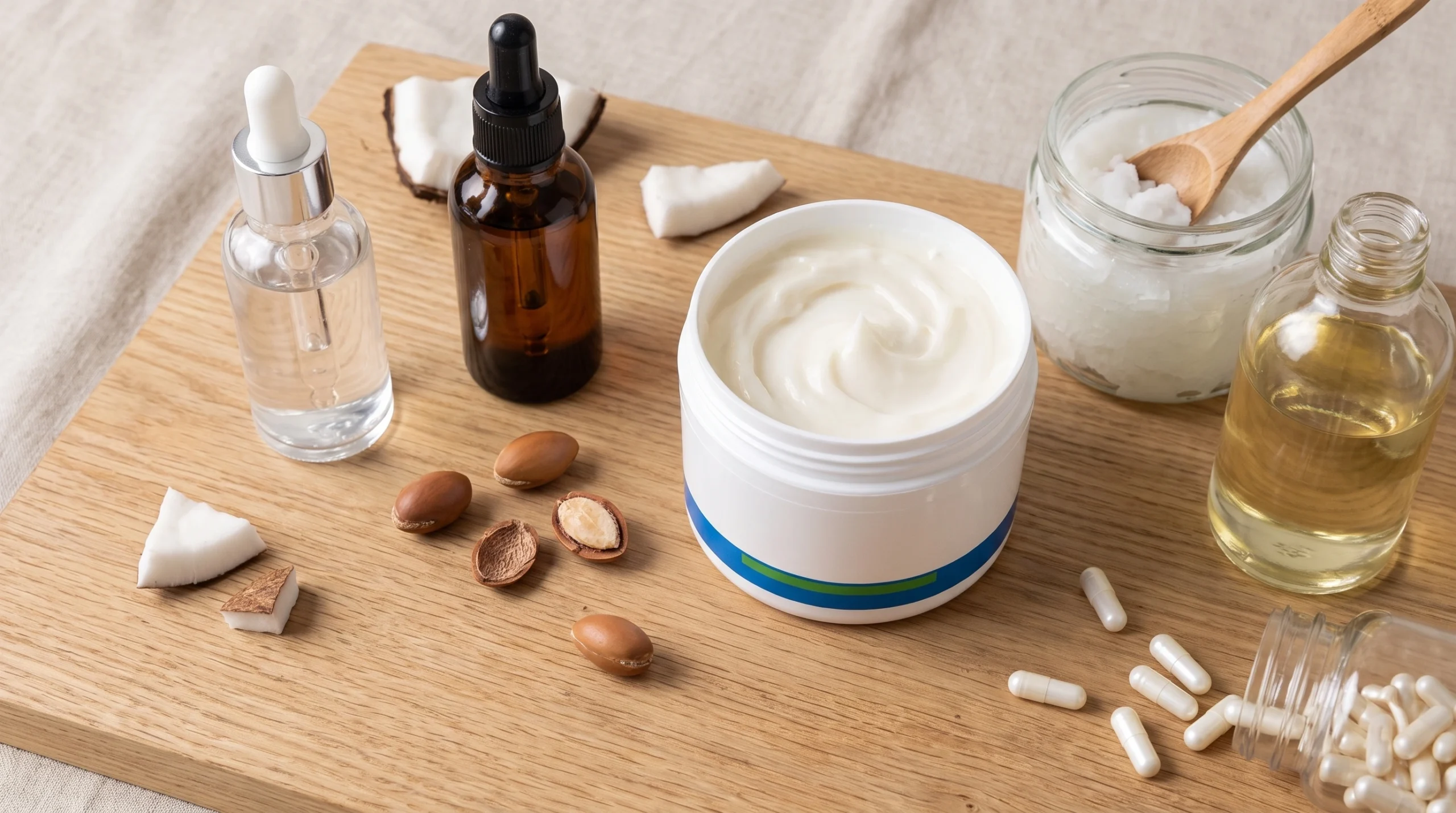
A good hair mask for dry damaged hair should ideally contain ingredients that complement the needs of dry, rough or chemically treated hair.
Keratin is a protein associated with the structure of hair.
In cosmetic hair products, keratin and keratin-derived ingredients are commonly used to condition and smooth the hair surface. A keratin-enriched mask may help damaged-looking hair feel smoother and more manageable.
However, a cosmetic keratin treatment should not be confused with permanently rebuilding damaged hair from within.
Hyaluronic acid is well known in skincare for its moisture-binding properties.
In hair-care formulations, it is used as a conditioning and moisture-supporting ingredient. It can help hair feel softer and more hydrated.
For dry hair, this makes it an interesting ingredient to look for in a nourishing hair mask.
Argan oil is widely used in hair-care products because of its emollient properties.
It can help improve the feel and appearance of dry hair while adding smoothness and shine.
Coconut oil is commonly used in hair-care formulations and can provide conditioning and emollient benefits.
It is particularly popular in products designed for dry or rough hair.
Castor oil is a thick plant oil frequently used in hair and scalp products.
In a hair mask, its primary cosmetic role is conditioning and helping hair feel softer and smoother.
Claims that castor oil directly causes significant new hair growth should be treated cautiously. A nourishing hair mask should not be marketed as a medical treatment for hair loss simply because it contains castor oil.
Biotin is a B vitamin associated with normal hair and nail health when the body has adequate nutritional levels.
It is also found in cosmetic hair-care formulations.
However, topical biotin should not be presented as a guaranteed treatment for hair loss or as a replacement for addressing an actual nutritional deficiency.
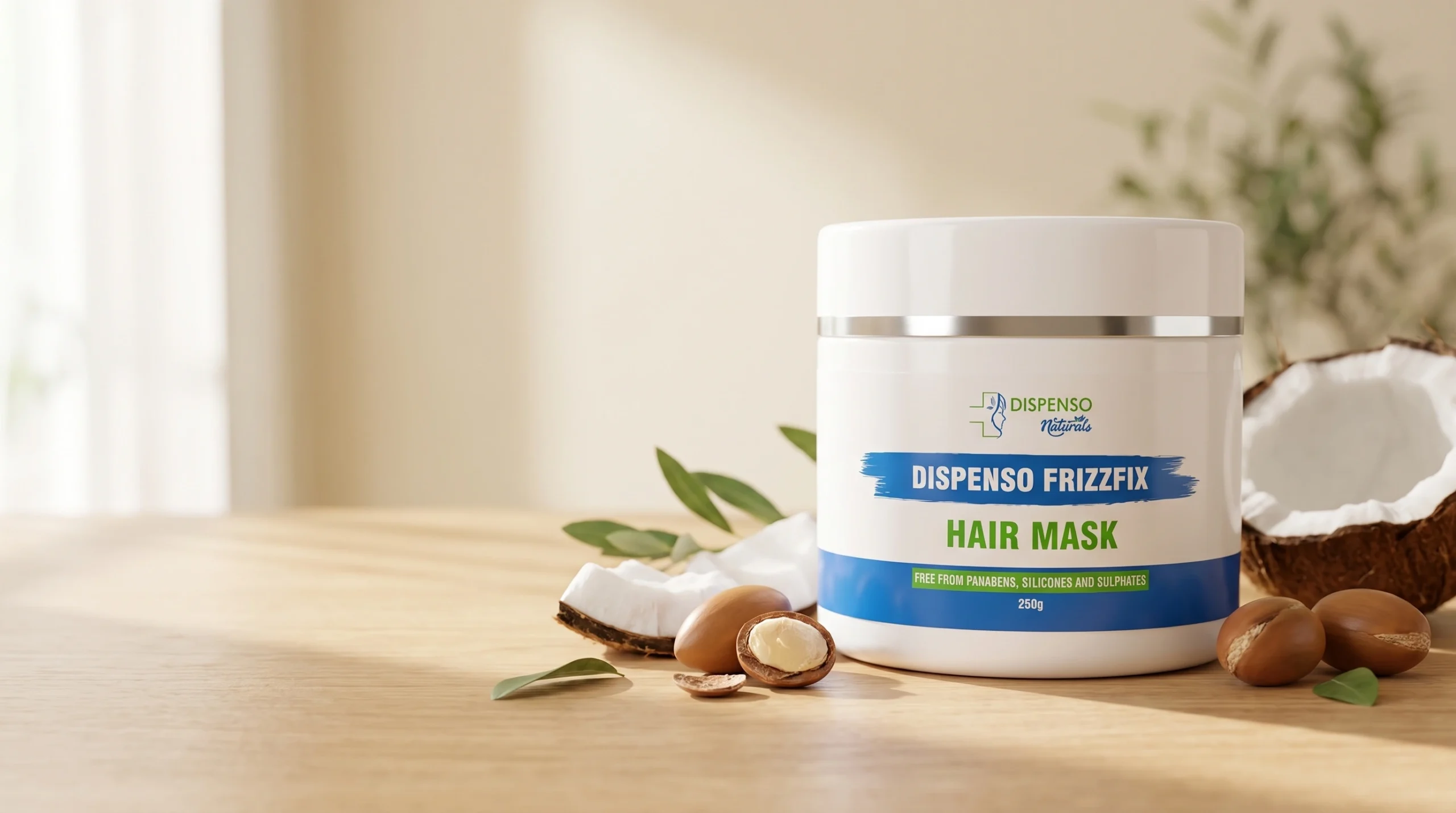
For people looking for a natural and nourishing hair mask for dry damaged hair, Dispenso Frizz Fix Hair Mask – 250gm combines several conditioning and hair-care ingredients in one formula.
The formula contains:
The combination is designed around the needs of dry, frizzy and damaged-looking hair, particularly hair that feels rough, lacks softness or has become difficult to manage.
Rather than relying on a single ingredient, the formula combines protein-based conditioning with moisture-supporting and oil-based ingredients.
Keratin helps provide a smoother, conditioned feel.
Hyaluronic Acid supports moisture and softness.
Argan and Coconut Oils provide nourishing and conditioning properties.
Castor Oil contributes to the rich conditioning feel of the formula.
Biotin complements the overall hair-care formulation.
The goal is simple: hair that feels softer, smoother and easier to manage while looking healthier and more polished.
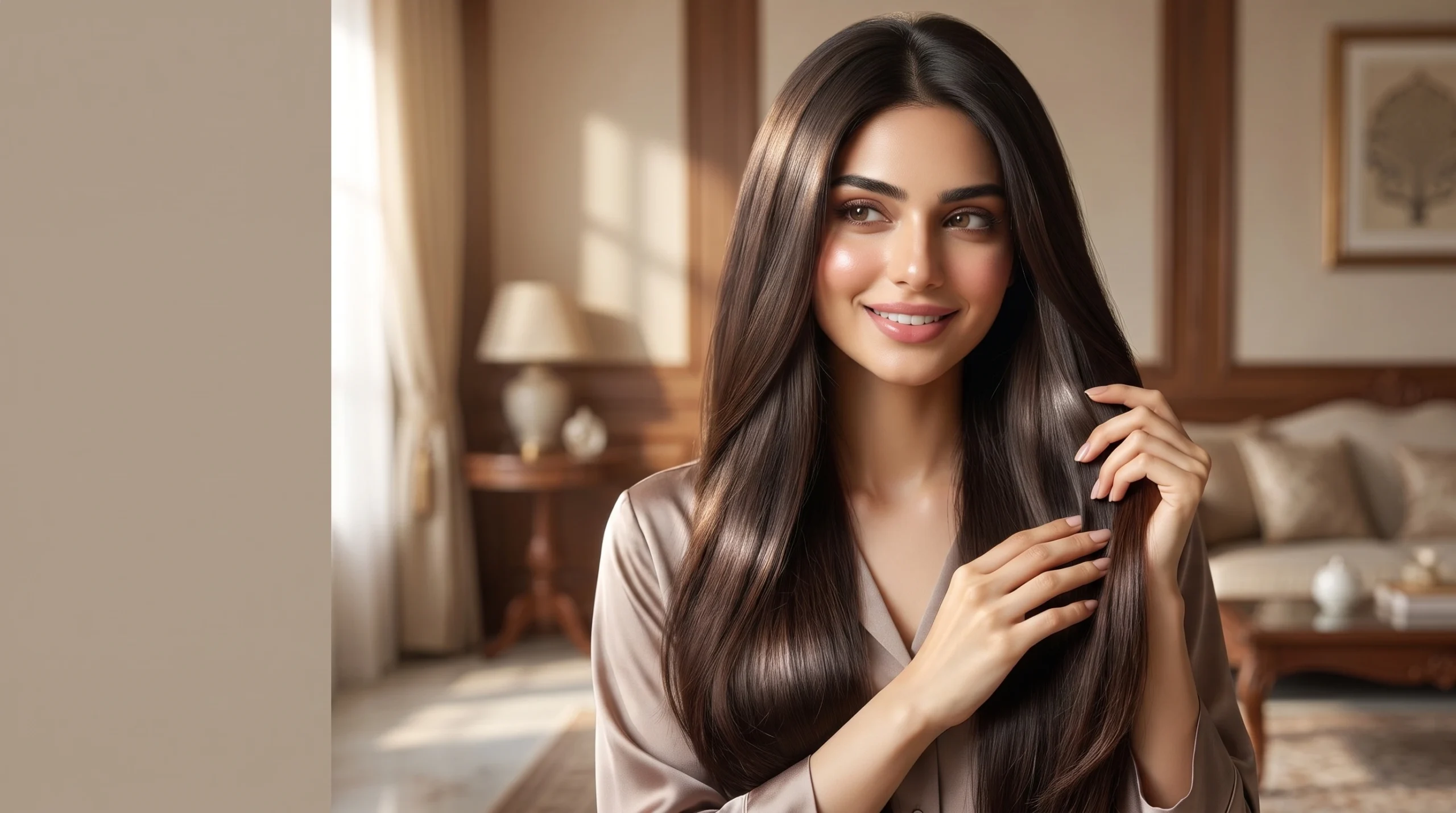
With regular and appropriate use, the mask can help provide:
Conditioning ingredients help reduce the rough feeling often associated with dry hair.
Smoother hair surfaces can reflect light more evenly, helping hair appear shinier.
The combination of oils, conditioning ingredients and moisture-supporting ingredients provides richer conditioning than a basic rinse-out routine.
Conditioned hair can be easier to comb, style and detangle.
Smoothing and conditioning can help make frizzy hair look more controlled, particularly when humidity is high.
When hair is better conditioned and easier to detangle, there may be less mechanical stress during routine handling.
Correct application matters just as much as the product you choose.
For Dispenso Frizz Fix Hair Mask, follow these steps:
Wash your hair with a suitable shampoo and rinse thoroughly.
Gently remove excess water and apply the mask evenly through clean, damp hair.
Focus primarily on the lengths and ends rather than applying a large amount directly to the scalp.
Allow the mask to remain on the hair for around 20 minutes.
For a more intensive conditioning experience, a warm towel can be used during this time.
Rinse the hair thoroughly with lukewarm water.
For general care, use approximately once a week.
For significantly dry or damaged-looking hair, the product instructions allow more frequent use, around 2–3 times weekly.
Adjust according to how your hair responds rather than assuming that more product always means better results.
Yes, depending on the formulation.
Dispenso Frizz Fix can be used as a conditioner substitute when your hair needs more intensive conditioning.
However, if your hair becomes heavy, greasy or difficult to style after frequent mask use, reduce the amount or frequency.
Fine or oily hair may need less product than thick, coarse or highly processed hair.
A hair mask can help improve the appearance and feel of frizzy hair, but it is not a permanent cure for frizz.
Frizz is influenced by several factors, including:
In humid Pakistani weather, moisture can interact with the hair fibre and make frizz more noticeable.
Regular conditioning, gentle drying, reduced heat exposure and a suitable hair mask can all form part of a better frizz-management routine.
If your hair has been coloured, bleached, straightened, rebonded or chemically processed, conditioning becomes particularly important.
Chemically treated hair can become more fragile and prone to dryness.
A nourishing hair mask containing ingredients such as keratin, oils and moisture-supporting ingredients can help improve the cosmetic feel and manageability of such hair.
However, no hair mask can completely undo every form of chemical damage.
If your hair is severely breaking, snapping close to the roots or undergoing unusual hair loss, a cosmetic mask may not address the underlying cause.
This is one of the most common misunderstandings about hair masks.
A hair mask primarily works on the hair fibre, not the hair follicle.
It can improve conditioning, reduce roughness and make hair easier to manage. This may help reduce some breakage associated with dryness and rough handling.
But a hair mask should not be presented as a treatment that directly stimulates new hair growth.
If you are experiencing persistent or significant hair loss, the underlying cause should be investigated separately.
A hair mask can make split ends look smoother and temporarily improve their feel, but it cannot permanently fuse a genuinely split hair shaft back together.
Once a strand has split, trimming is the reliable way to remove the split section.
A regular conditioning routine can still help reduce dryness and minimise the factors that contribute to roughness and breakage.
There is no universal frequency for everyone.
Your ideal routine depends on:
For a rich conditioning mask such as Dispenso Frizz Fix, once weekly can work well as a general starting point.
More frequent use may be appropriate for particularly dry or damaged-looking hair, following the product instructions.
If hair starts feeling coated, limp or unusually heavy, reduce frequency.
When comparing hair masks, don’t choose based only on words such as “repair,” “natural” or “professional.”
Look at the formulation.
For dry, damaged-looking hair, consider whether the product offers a combination of:
Also consider your actual hair problem.
If your main concern is dryness, look for richer conditioning.
If your concern is frizz, prioritise smoothing and conditioning.
If your hair is chemically treated, look for a routine designed around gentle handling and regular conditioning.
Dispenso Frizz Fix Hair Mask is formulated for people dealing with dry, frizzy and damaged-looking hair who want a richer conditioning treatment as part of their regular routine.
Its formula combines keratin, hyaluronic acid, argan oil, coconut oil, castor oil and biotin.
It is:
The emphasis is on practical hair care: improving the way dry and damaged-looking hair feels, looks and behaves rather than making unrealistic promises about permanent repair.
Even a good hair mask may not perform well if it is used incorrectly.
More product does not automatically mean better conditioning.
Use enough to coat the lengths and ends without unnecessarily weighing the hair down.
Unless a product is specifically formulated for scalp use, concentrate a rich hair mask on the lengths and ends.
Longer application does not necessarily produce better results.
Follow the product’s recommended processing time.
Very hot water can leave some hair feeling dry and uncomfortable. Lukewarm water is generally a better choice for rinsing.
Hair masks are cosmetic conditioning products. Persistent hair loss needs a different approach.
A mask can support your routine, but repeatedly exposing already-damaged hair to high heat or aggressive chemical treatments can continue the damage.
A simple routine can be more useful than constantly changing products.
Step 1: Wash with a suitable shampoo.
Step 2: Remove excess water gently.
Step 3: Apply your hair mask to the lengths and ends.
Step 4: Leave for the recommended time.
Step 5: Rinse thoroughly with lukewarm water.
Step 6: Reduce unnecessary heat styling.
Step 7: Handle wet hair gently and avoid aggressive towel rubbing.
Step 8: Repeat consistently rather than expecting dramatic overnight results.
The best hair mask depends on your hair’s condition, texture and needs. For dry and damaged-looking hair, a formula combining conditioning ingredients, oils and moisture-supporting ingredients can be useful.
Dispenso Frizz Fix contains keratin, hyaluronic acid, argan oil, coconut oil, castor oil and biotin and is designed for dry, frizzy and damaged-looking hair.
Keratin and keratin-derived ingredients are commonly used in cosmetic hair products to condition and smooth the hair surface. They can help damaged-looking hair feel softer and more manageable.
Hyaluronic acid is used in hair-care formulations for its moisture-supporting properties and can contribute to a softer, more conditioned feel.
Once a week is a practical starting point. For particularly dry or damaged-looking hair, the product can be used more frequently according to its instructions.
Yes. Dispenso Frizz Fix can be used as a conditioner substitute when your hair needs more intensive conditioning.
For Dispenso Frizz Fix, leave it on for approximately 20 minutes before rinsing thoroughly.
Yes, but use a smaller amount and focus mainly on the lengths and ends. Applying a rich mask heavily to an oily scalp may make the hair feel weighed down.
A hair mask is not a treatment for medical hair loss. It can improve conditioning and may help reduce breakage caused by dryness or rough handling, but persistent hair loss should be assessed separately.
A conditioning hair mask can help reduce the appearance and feel of frizz by improving smoothness and manageability. Results also depend on humidity, hair texture, damage and your overall routine.
A hair mask can temporarily make split ends look and feel smoother, but it cannot permanently repair a genuinely split strand. Trimming is the reliable way to remove split ends.
Yes. The product is designed for dry, frizzy and damaged-looking hair and can be incorporated into a conditioning routine for chemically treated hair.
Yes. Dispenso Frizz Fix Hair Mask is made in Pakistan.
Finding the right hair mask for dry damaged hair is less about chasing a miracle ingredient and more about understanding what your hair needs.
Dryness, frizz, breakage and chemical damage often require consistent conditioning, gentler handling and fewer damaging habits alongside a suitable treatment.
A nourishing formula containing ingredients such as keratin, hyaluronic acid, argan oil and coconut oil can be a useful addition to that routine.
For those looking for a conditioning treatment designed specifically around dry, frizzy and damaged-looking hair, Dispenso Frizz Fix Hair Mask brings keratin, hyaluronic acid, argan oil, coconut oil, castor oil and biotin together in one formula.
The goal is simple: softer, smoother, more manageable hair that looks healthier with consistent care.
Order Now: Frizz Fix Hair Mask by Dispenso Naturals for dry damaged hair